Pneumatic Vacuum Conveying for Parts, Scrap and Process Material
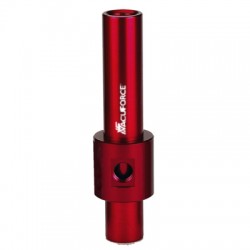
Vacuum generator conveyors use compressed-air Venturi technology to create airflow for transferring parts, trim and lightweight process materials through a conveying line. The source category identifies applications including injection-molding part transfer, paper cut-off extraction and plastic or steel waste transfer.
With no moving parts or heat generation in the Venturi section, these conveyors are designed for low-maintenance material transfer. Aluminum and stainless-steel versions are available, with hard-anodized finishes listed for abrasion resistance.
Download Vacuum Conveyor DatasheetVacuum Conveyor Features
- Aluminum or stainless-steel options
- Hard-anodized finish for abrasion resistance
- No moving parts in the Venturi generator
- No heat generation from the vacuum-generation principle
- Low-maintenance pneumatic conveying
- Suitable for part and waste transfer
Why Use Venturi Conveying?
- Compressed-air-driven conveyors can move products or scrap without a mechanical blower at the pickup point
- They are useful for intermittent automated transfer where compact installation and minimal mechanical maintenance are priorities
Common Applications
- Injection-molded part transfer
- Paper cut-off extraction
- Plastic trim and scrap transfer
- Steel waste transfer
- Packaging lines
- Automated material conveying
Frequently Asked Questions
What is a vacuum generator conveyor?
It is a compressed-air-driven Venturi device that creates airflow to convey parts, scrap or other suitable material.
What materials are these conveyors used for?
The source description lists injection-molded parts, paper cut-offs, plastic waste and steel waste as example applications.
Are moving parts required?
The source description states that the units have no moving parts.
Do they generate heat?
The source description states no heat generation from the Venturi conveying unit.
What body materials are available?
Aluminum and stainless-steel options are listed.
Why use a hard-anodized finish?
The source description identifies the hard-anodized finish as abrasion resistant.
Are these systems maintenance free?
The source describes them as maintenance free, but the surrounding conveying system should still be inspected and kept clear.
How do I select a conveyor?
Consider material size, weight, conveying distance, required transfer rate, air supply and wear characteristics.